Table of Contents
Baking can be an enjoyable and rewarding skill, especially when you see a soft, delicious cake, perfectly baked cookies, or beautifully decorated cupcakes come out of the oven. However, beginners often face a few common problems while learning. A cake may sink in the middle, cookies may become too hard, or the texture may not turn out as expected.
The good news is that most beginner baking mistakes are easy to understand and avoid with the right knowledge and regular practice. Whether you are baking at home or planning to join baking classes in Gurugram, learning the basics can help you become more confident in the kitchen.
Baking is different from ordinary cooking because measurements, temperature, timing, and techniques can significantly affect the final result. Even a small change in the amount of flour or baking powder can change the texture of a cake.
In this guide, we will discuss the most common baking mistakes beginners make, how to avoid them, and practical ways to improve your baking skills.
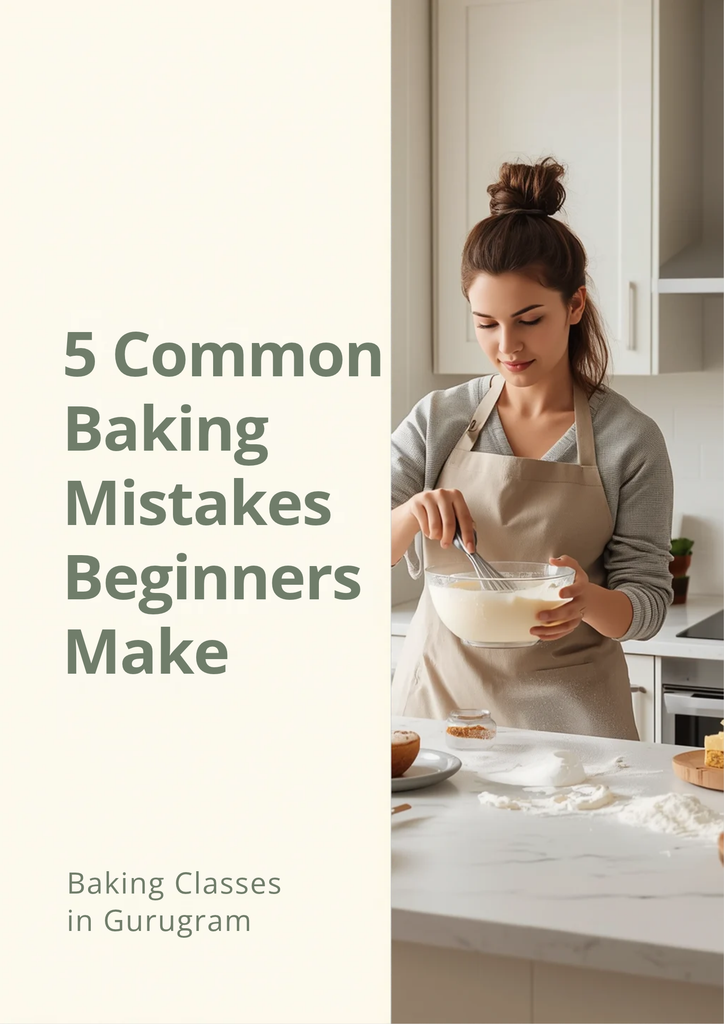
Introduction
Why Do Beginners Make Baking Mistakes?
When people start baking, they often focus only on the recipe and ingredients. However, successful baking also depends on preparation, accurate measurements, oven temperature, mixing techniques, and cooling time.
Some beginners also try complicated recipes before understanding basic baking techniques. Starting with simple recipes and gradually developing your skills can make the learning process much easier.
If you want structured guidance, baking classes in Gurugram can provide an opportunity to learn these techniques through practical demonstrations and hands-on practice.
Let’s look at the most common mistakes and how you can avoid them.
1. Not Measuring Ingredients Correctly
One of the most common baking mistakes beginners make is inaccurate measurement.
In cooking, you can sometimes adjust ingredients according to taste. Baking is different. Ingredients work together in specific proportions, so adding too much or too little of something can affect the final product.
For example, too much flour can make a cake dry and dense, while too little flour can make the batter too runny. Similarly, adding too much baking powder can affect the taste, texture, and structure of the cake.
How to Avoid This Mistake
Use proper measuring cups and spoons, or preferably a kitchen weighing scale when the recipe provides measurements by weight.
Before beginning:
- Read the entire recipe.
- Prepare all ingredients.
- Measure each ingredient carefully.
- Level dry ingredients instead of using an overflowing cup.
- Follow the recipe quantities accurately.
Learning accurate measurement is one of the first skills taught in many baking classes in Gurugram, because it forms the foundation of consistent baking.
2. Skipping the Oven Preheating Step
Another common mistake is putting the cake or cookies into an oven that has not reached the required temperature.
Preheating allows the oven to reach a stable temperature before the batter or dough goes inside. This helps the baking process begin correctly.
If you place your cake in a cold or partially heated oven, the baking time and texture may change. Cakes may rise unevenly, cookies may spread differently, and the final texture may not be what you expected.
How to Avoid This Mistake
Always check the recipe for the required temperature and preheat the oven before placing your baking tray inside.
For example, if your recipe requires 180°C, allow the oven to reach that temperature before baking.
Keep in mind that ovens can vary. The temperature displayed on your oven may not always be exactly the temperature inside. With regular baking, you can learn how your particular oven behaves.
If you attend baking classes in Gurugram, practical demonstrations can help you understand oven settings, temperature control, and baking time more effectively.
3. Overmixing the Batter
Mixing is another area where beginners can easily make mistakes.
Many people assume that mixing the batter for a longer time will make the cake better. In reality, overmixing can change the texture of certain baked products.
When flour is mixed with liquid, gluten begins to develop. For many cakes, excessive gluten development can result in a tougher or denser texture.
How to Avoid Overmixing
Once the dry ingredients have been incorporated, mix only until the ingredients are combined, unless the recipe specifically requires additional mixing.
A few small lumps may be acceptable depending on the recipe.
Try to understand the difference between:
- Mixing
- Folding
- Whisking
- Creaming
- Kneading
These techniques are used for different recipes and produce different results.
Learning these basic techniques through baking classes in Gurugram can help beginners understand not just what to do, but why each technique matters.
4. Opening the Oven Too Early
Opening the oven repeatedly to check your cake is another common mistake.
When you open the oven door, heat escapes and the internal temperature can drop. This can interfere with the structure of cakes and other delicate baked products.
Some cakes may rise during baking and then collapse if the oven temperature changes significantly at the wrong stage.
What Should You Do Instead?
Use the oven light and glass door to observe your cake whenever possible.
Follow the recipe’s recommended baking time before checking. Once the cake is close to being fully baked, you can carefully test it using a skewer or toothpick if the recipe recommends it.
Avoid opening the oven repeatedly just because you are curious about how the cake looks.
This simple habit can make a noticeable difference as you develop your baking skills through practice or baking classes in Gurugram.
5. Using Ingredients at the Wrong Temperature
Ingredient temperature can affect the texture and consistency of baked products.
Some recipes specifically require ingredients such as butter, eggs, milk, or cream cheese to be at room temperature.
For example, when making certain cakes, softened butter can combine more effectively with sugar during the creaming process.
Cold ingredients can sometimes affect how ingredients combine.
How to Avoid This Mistake
Always read the recipe carefully before starting.
If the recipe says room-temperature butter, do not automatically replace it with melted butter. These ingredients behave differently and can produce different results.
Prepare temperature-sensitive ingredients in advance so that they are ready when you begin.
Understanding ingredient temperature is an important part of baking classes in Gurugram, especially for beginners who are learning cake and pastry techniques.
6. Using the Wrong Baking Pan
The baking pan you choose can affect your final result.
A recipe designed for a particular pan size may not bake correctly if you use a significantly smaller or larger pan.
A smaller pan can make the batter deeper, which may increase the baking time. A larger pan can make the batter shallower, which may reduce the baking time.
The material and color of the pan can also influence how quickly the edges of your cake bake.
Beginner Tip
Before starting a recipe, check:
- Pan size
- Pan shape
- Pan material
- Recommended filling level
- Required baking time
If you are learning through baking classes in Gurugram, ask your instructor why a particular pan is selected for each recipe. Understanding the reason behind equipment choices will make you more confident when experimenting with recipes at home.
7. Ignoring Oven Temperature Accuracy
Your oven’s displayed temperature and its actual internal temperature may not always match perfectly.
For example, an oven set to 180°C may experience temperature fluctuations during the baking process.
This is one reason two people can follow the same recipe and still get slightly different results.
How Can You Improve Temperature Control?
If you bake frequently, consider using an oven thermometer to understand the actual temperature inside your oven.
Also learn whether your oven uses:
- Conventional heating
- Fan-assisted heating
- Top and bottom heating
- Other specialized settings
Understanding your oven is an important part of developing consistent baking skills.
Practical baking classes in Gurugram can help beginners understand how different oven settings affect cakes, cookies, breads, and pastries.
8. Not Following the Recipe Order
Ingredients are not always added randomly.
A recipe may instruct you to cream butter and sugar first, add eggs gradually, and then incorporate dry ingredients. Another recipe may require a different sequence.
Changing the order can affect how ingredients combine.
Make Preparation Easier
Before you start:
- Read the complete recipe.
- Prepare your equipment.
- Measure your ingredients.
- Arrange them in the order you need them.
- Follow each instruction carefully.
This preparation method is often called mise en place, which means having ingredients and equipment prepared before you begin.
It can make baking less stressful, particularly for beginners attending baking classes in Gurugram for the first time.
9. Decorating the Cake Before It Has Cooled
Imagine spending time baking a beautiful cake and then covering it with frosting while it is still warm.
The result may be disappointing.
Warm cake can cause buttercream, whipped cream, chocolate, or other frostings to soften or melt.
The frosting may slide off the cake or create an uneven appearance.
How to Avoid This Problem
Allow the cake to cool properly before decorating.
Depending on the recipe, you may need to:
- Remove the cake from the pan carefully.
- Allow it to cool on a wire rack.
- Check that the center is completely cool.
- Level the cake if necessary.
- Apply a crumb coat.
- Chill the cake before the final decoration.
Cake decoration is a skill that becomes much easier with practice. Many baking classes in Gurugram include practical cake decorating exercises so beginners can learn how to handle cakes and frosting correctly.
10. Trying Advanced Recipes Too Early
Another mistake beginners make is jumping directly into complicated recipes.
It is exciting to try elaborate cakes, pastries, breads, and decorative desserts. However, learning basic skills first can make advanced recipes easier later.
Start with simple recipes such as:
- Basic sponge cake
- Cupcakes
- Cookies
- Brownies
- Simple muffins
- Basic frosting
Once you understand measurements, mixing, oven temperature, baking time, and cooling, you can gradually move toward more advanced recipes.
A structured beginner program can help you build these skills step by step. Baking classes in Gurugram can be useful for learners who prefer guided practice instead of trying to figure everything out alone.
How Beginners Can Improve Their Baking Skills
Becoming a better baker does not happen overnight. Consistent practice is one of the most important parts of learning.
Here are some simple ways to improve:
Practice One Recipe Multiple Times
Instead of trying a completely different recipe every day, repeat a basic recipe several times.
Each attempt can help you understand:
- Batter consistency
- Oven behavior
- Baking time
- Texture
- Ingredient measurements
Keep Notes
Write down what happened after each baking session.
For example:
- Was the cake too dry?
- Did it rise evenly?
- Was the center underbaked?
- Was the frosting too soft?
- Did the cookies spread too much?
These notes can help you identify patterns and improve.
Learn From Practical Demonstrations
Watching an experienced baker demonstrate a technique can be easier than reading instructions alone.
You can observe how the batter looks, how ingredients are mixed, how dough is handled, and how decoration is applied.
This is one reason baking classes in Gurugram can be helpful for people who prefer hands-on learning.
What Can You Learn in Beginner Baking Classes?
Beginner-focused classes can introduce students to fundamental techniques before moving toward more advanced recipes.
Depending on the class, you may learn:
- Ingredient measurement
- Baking fundamentals
- Cake preparation
- Batter mixing
- Oven temperature control
- Cookies and cupcakes
- Frosting techniques
- Cake decoration
- Basic pastry techniques
- Food presentation
The exact curriculum depends on the bakery or training provider, so check the individual class details before booking.
If you are searching for baking classes in Gurugram, look for a program that matches your current skill level and learning goals.
Why Hands-On Practice Matters
Reading a recipe can teach you the steps, but practical experience helps you understand the visual and physical cues involved in baking.
For example, a recipe might say “mix until combined,” but a beginner may not know exactly what that consistency looks like.
During a practical class, you can see the difference between under-mixing and overmixing.
Similarly, learning cake decoration becomes easier when you can physically practice piping, smoothing, filling, and decorating.
Hands-on baking classes in Gurugram can therefore help beginners connect theoretical knowledge with practical experience.
Learn Baking with Nina’s Bakery
If you are interested in developing your baking skills, Nina’s Bakery offers an opportunity to explore practical baking and culinary learning.
Instead of simply reading about common baking mistakes, you can learn techniques through guided practice and understand how different ingredients, equipment, temperatures, and methods work together.
Whether your goal is to learn cake baking as a hobby, improve your home-baking skills, or explore new culinary techniques, choosing the right class can help you learn in a structured environment.
Explore the available baking classes in Gurugram and compare the class options, techniques, and prices before selecting the one that matches your interests.
Frequently Asked Questions About Baking for Beginners
Is baking difficult for beginners?
Baking may seem difficult initially because it requires accurate measurements, timing, temperature control, and specific techniques. However, beginners can learn the fundamentals through simple recipes and regular practice.
What should beginners learn first in baking?
Beginners should start with ingredient measurement, oven temperature, mixing techniques, basic cake preparation, and simple decorating techniques.
How long does it take to learn basic baking?
The learning time varies from person to person. Regular practice and structured instruction can help beginners become familiar with fundamental techniques more quickly.
Are baking classes useful for beginners?
Practical classes can provide demonstrations, guided practice, and feedback. They may be useful for beginners who want to learn techniques in a structured environment.
What can I learn in baking classes in Gurugram?
Depending on the program, you may learn cake baking, cookies, cupcakes, frosting, decoration, pastry techniques, ingredient handling, and basic baking methods.
Can I learn cake baking without professional experience?
Yes. Many beginner recipes can be learned without previous professional experience. Starting with fundamental techniques can help you build confidence.
What equipment does a beginner need for baking?
Basic equipment can include measuring cups or a weighing scale, mixing bowls, a whisk or mixer, spatulas, baking pans, an oven, cooling racks, and basic decorating tools.
Ready to Start Your Baking Journey?
Making mistakes is a normal part of learning how to bake. The important thing is to understand why the mistake happened and use that experience to improve your next attempt.
Start with simple recipes, measure ingredients carefully, understand your oven, follow instructions, and give yourself time to develop your skills.
If you want to learn through practical guidance, explore the baking classes in Gurugram available at Nina’s Bakery.
Explore Baking Classes & Prices
Choose a class that matches your interests, learn practical techniques, and start building your confidence in baking.
Final Baking Tip
Don’t expect every cake or cookie to be perfect on your first attempt. Every baking session is an opportunity to learn something new. With accurate measurements, the right techniques, proper temperature control, and regular practice, you can gradually become a more confident baker.
And when you are ready to move from learning at home to hands-on practice, baking classes in Gurugram can give you the opportunity to develop your skills with practical guidance.
Hi, this is a comment.
To get started with moderating, editing, and deleting comments, please visit the Comments screen in the dashboard.
Commenter avatars come from Gravatar.